Over the past decade, television viewing in the UK has undergone a dramatic transformation. Traditional cable and satellite packages were once seen as expensive and restrictive, pushing millions of households to “cut the cord” in favor of streaming services. The promise was simple: more choice, greater flexibility, and lower costs.
Yet today, many UK viewers are discovering an unexpected reality. Streaming, once the budget-friendly alternative, has quietly become expensive, fragmented, and difficult to manage. Instead of one monthly cable bill, households now juggle multiple subscriptions—often paying more than they did before.
This blog explores how UK streaming costs have grown, why bundling services is draining household budgets, and what viewers should consider when searching for a true cable TV alternative.
[elementor-template id=”2191″]
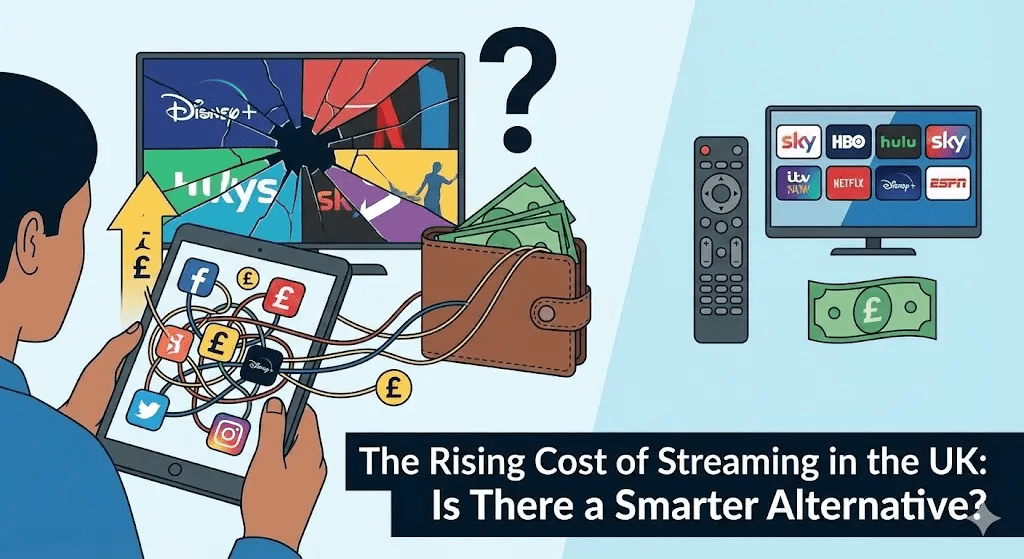
How Streaming Became the New Monthly Expense
In the early days, streaming platforms offered exceptional value. A single subscription provided hours of entertainment at a fraction of the cost of cable. Over time, however, the market shifted.
As more platforms entered the space, content became divided. Sports moved to premium services. Films rotated between platforms. Popular shows became exclusive to individual providers. To keep up, viewers subscribed to multiple services.
What began as one subscription often turned into four or five.
Today, a typical UK household may pay separately for:
- General entertainment
- Sports coverage
- Film libraries
- Children’s programming
- Occasional rentals or event passes
Each service appears affordable on its own, but together they form a significant monthly expense.
Understanding the True Cost of Streaming in the UK
Many people underestimate how much they spend on streaming because payments are spread across different platforms. When added together, the total can be surprising.
A realistic monthly breakdown may include:
- Entertainment streaming: £15–£20
- Sports streaming: £25–£40
- Film or premium add-ons: £10–£15
- Occasional rentals or upgrades
This can easily bring the total to £70–£80 per month, sometimes more.
Despite this cost, viewers often still face:
- Missing channels
- Incomplete sports coverage
- Content rotating out unexpectedly
- Buffering during peak viewing times
In effect, many households are paying premium prices for a fragmented experience.
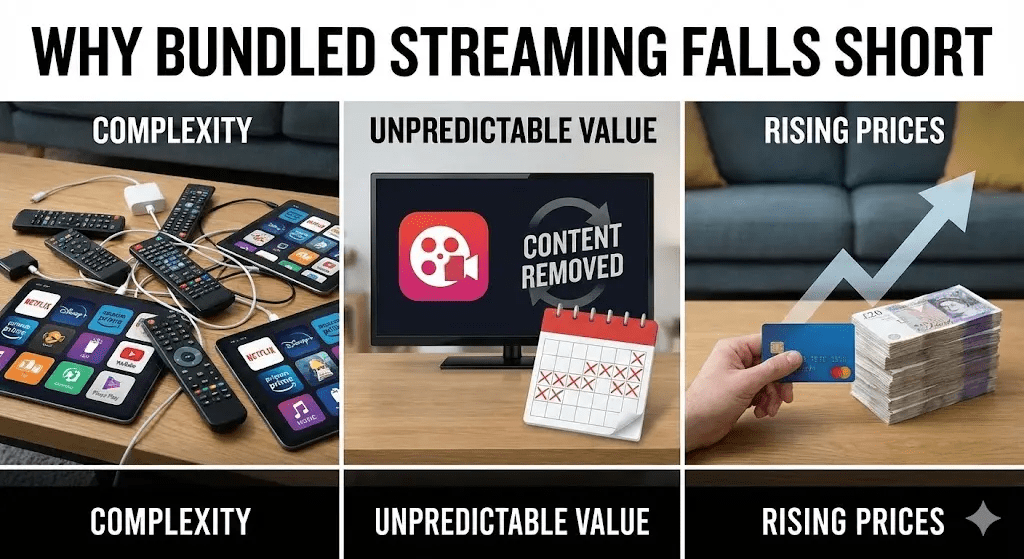
Why Bundled Streaming Services Fall Short
The main challenge with modern streaming is fragmentation. Each platform focuses on a specific type of content, forcing viewers to subscribe to several services to meet their needs.
This creates three common frustrations:
- Complexity
Managing multiple apps, passwords, profiles, and billing dates becomes tedious, especially for families.
- Unpredictable Value
Content libraries change frequently. A service that feels worthwhile one month may offer little the next.
- Rising Prices
Streaming services regularly increase prices, often with little added value, gradually eroding affordability.
As a result, many UK viewers are reconsidering whether streaming has truly replaced cable—or simply recreated it in a more expensive form.
[elementor-template id=”2191″]
What Viewers Want From a True Cable TV Alternative
For many households, the issue is not about rejecting streaming altogether. Instead, it’s about finding a solution that restores simplicity and value.
An ideal cable TV alternative should offer:
- Broad channel access in one place
- Live TV alongside on-demand content
- Predictable, affordable pricing
- Stable performance during live events
- Minimal setup and maintenance
Without these elements, the promise of modern TV remains unfulfilled.
The Importance of Price Transparency
One of the biggest advantages traditional cable once offered was clarity. One bill, one service, one price. Streaming disrupted that model but failed to replace its simplicity.
Price transparency matters, especially for cost-conscious households. When users can clearly see what they pay each month—and what they receive in return—they can make better decisions.
A growing number of viewers now actively compare:
- Monthly vs annual costs
- Content availability
- Streaming stability
- Overall convenience
This shift has renewed interest in alternative platforms that aim to consolidate content rather than divide it.
Performance Matters as Much as Content
While cost is a major factor, performance plays an equally important role. Many UK viewers experience buffering, lag, or quality drops—particularly during live sports or peak hours.
This is frustrating, especially when paying premium prices.
Stable streaming depends on:
- Efficient server infrastructure
- Bandwidth optimisation
- Load balancing during high-demand periods
Without these elements, even the most expensive subscriptions can deliver a poor experience.
Rethinking the Future of TV Viewing in the UK
The UK television market is at a crossroads. Traditional cable has declined, but the current streaming model has exposed its own weaknesses. Viewers are increasingly aware that paying more does not always mean getting more.
This awareness is driving demand for platforms that:
- Reduce the need for multiple subscriptions
- Offer better long-term value
- Simplify the viewing experience
- Focus on performance and reliability
For many households, the goal is not endless choice—it is convenient access to the content they actually watch, at a fair price.
How to Decide If Your Current Setup Is Worth It
If you’re unsure whether your current streaming setup makes sense, ask yourself a few simple questions:
- Do I watch all the services I pay for every month?
- Am I paying extra just to access one or two specific channels?
- Do I still experience buffering or quality issues?
- Has my total monthly spend increased over time?
If the answer to most of these questions is “yes,” it may be time to reconsider your approach.
Final Thoughts
Streaming was meant to simplify television and reduce costs. For many UK households, it has done the opposite. Rising prices, fragmented content, and performance issues have created a new version of the cable problem—without the convenience of a single solution.
Understanding where your money goes is the first step toward making smarter viewing choices. By comparing total costs, evaluating performance, and prioritising simplicity, viewers can regain control over their entertainment budgets.
The future of television doesn’t have to be complicated or expensive—but it does require informed decisions.