
The way we watch television has changed dramatically over the past decade. Gone are the days when flipping through a cable guide was the only option for home entertainment. Today, consumers have a smorgasbord of choices, from traditional cable TV to subscription streaming platforms like Netflix, and the increasingly popular Internet Protocol Television (IPTV). But with so many options, how do you determine which service gives you the best bang for your buck while offering the channels and content you actually want? In this post, we’ll break down the key differences between cable TV, Netflix, and IPTV in 2026, focusing on cost, channel selection, and overall value.
Thank you for reading this post, don't forget to subscribe!Understanding the Contenders in 2026
Cable TV: The Classic Choice
Cable TV has been the standard for decades. Its traditional model relies on bundled channel packages, often requiring a contract and the rental of set-top boxes. Typical bundles might include dozens or even hundreds of channels, spanning news, sports, movies, and entertainment.
Cost Structure: While prices vary by region and provider, many mid-tier cable packages in 2026 are projected to cost between $70–$120 per month, with premium sports or movie channels tacking on extra fees. Installation fees and equipment rentals can add another $10–$20 monthly.
Trends to Watch: Cable companies have been slowly unbundling packages to compete with streaming services. In 2026, we can expect more à la carte options, giving viewers the ability to pay for only the channels they want. Still, cable is likely to remain more expensive than streaming for basic entertainment.
Netflix and Other SVODs: On-Demand Binge Heaven
Subscription video-on-demand (SVOD) platforms like Netflix have revolutionized viewing habits. Instead of adhering to a schedule, you choose what to watch and when.
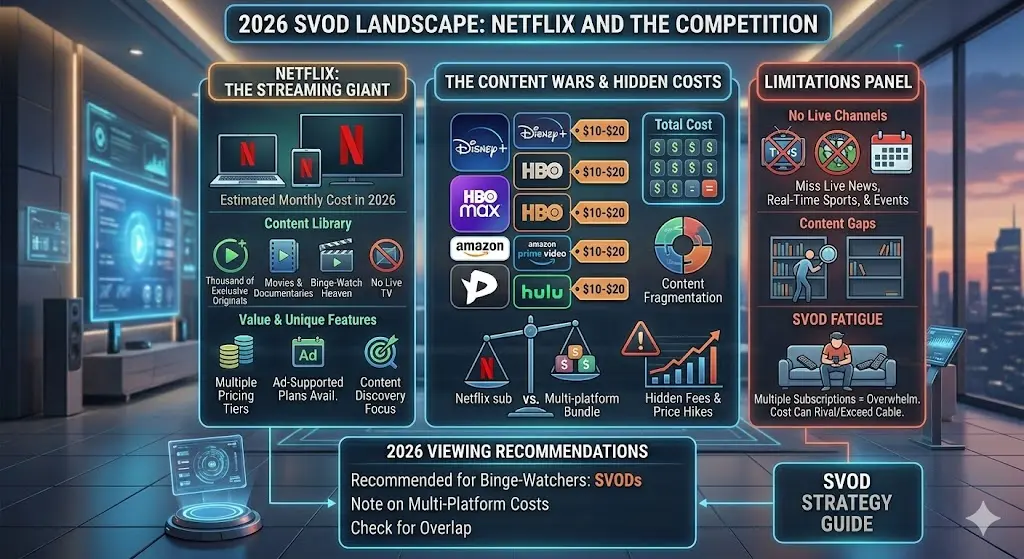
Pricing and Offerings: In 2026, Netflix is expected to offer multiple tiers—standard HD, 4K UHD, and ad-supported lower-cost plans—ranging roughly from $10 to $25 per month. Its library continues to grow with a mix of movies, series, documentaries, and exclusive originals that you can’t find elsewhere.
Limitations: Netflix and other SVODs generally do not offer live channels, which means you miss out on real-time sports, news, or events. Additionally, as more people subscribe to multiple platforms (Disney+, HBO Max, Amazon Prime Video), the cost of maintaining a complete content library can rival—or even exceed—cable prices.
IPTV: The Flexible Internet-Based Option
IPTV delivers television content over the internet rather than traditional cable or satellite networks. It can be provided by licensed operators or, unfortunately, through unofficial services.
How It Works: A legitimate IPTV service streams channels to your TV or device via the internet. Many providers now offer packages comparable to cable, including live sports, international channels, and on-demand content.
Pros: IPTV can offer tremendous variety at potentially lower costs, with some packages giving access to hundreds of channels for $20–$50 per month. Flexible subscriptions allow viewers to tailor their channel lineup.
Cons: Internet dependency is a major factor—slow connections can disrupt viewing. Additionally, there’s a legal risk with unofficial services, which may offer channels without proper licensing. For safety, always choose authorized IPTV providers.
Cost Analysis: What Will You Pay in 2026?
Direct Costs
- Cable TV: $70–$120/month for standard packages; premium channels extra
- Netflix (and other SVODs): $10–$25/month per platform; multiple subscriptions can increase total cost
- IPTV: $20–$50/month for robust channel packages; cheaper than cable for similar content
Hidden Costs
Cable can come with installation fees, equipment rental, and regional taxes. SVODs may require multiple subscriptions to cover all your favorite shows. IPTV could lead to high internet data usage if your plan has a cap, and unofficial services carry potential legal and security risks.
Value for Money
If your primary goal is variety and live content, cable may still win, but at a higher price. SVODs shine for binge-watching exclusive shows and movies, providing excellent content per dollar if you subscribe to one or two platforms only. IPTV offers a middle ground: broad channel access at a lower monthly cost, provided you use legitimate services and have a strong internet connection.
Channel Variety and Content
Channel Count
- Cable TV: Offers hundreds of channels, including local stations, news, sports, and niche content
- Netflix and SVODs: Thousands of titles on-demand, but limited to no live channels
- IPTV: Hundreds of live channels are often available, including international programming, news, and sports
Content Exclusivity
Netflix excels in original content, giving subscribers shows and films they can’t find anywhere else. Cable provides a range of live events, especially sports, and some premium channels have exclusive content. IPTV can combine the best of both worlds if using legitimate services, offering live channels and access to on-demand libraries.
On-Demand vs. Live
SVODs dominate in on-demand content, perfect for binge-watchers. Cable and IPTV remain the go-to for live events, particularly sports and news, where timing matters.
User Experience and Other Factors
Setup and Usability
Cable typically requires professional installation and a set-top box, whereas SVODs only need a compatible device and internet connection. IPTV may require a smart TV app or dedicated box, but setup is generally straightforward for licensed providers.
Reliability and Quality
Cable tends to be the most stable, unaffected by internet speed. SVODs and IPTV quality depend heavily on bandwidth; 4K streaming can demand 15–25 Mbps for smooth performance.
Legality and Risk
It’s crucial to avoid unofficial IPTV services, as they often operate without proper licensing. Stick to reputable providers to protect your devices, data, and peace of mind.
Which Option is Best in 2026?
The “best” service depends on your viewing habits and priorities:
| User Type | Recommended Service | Why |
|---|---|---|
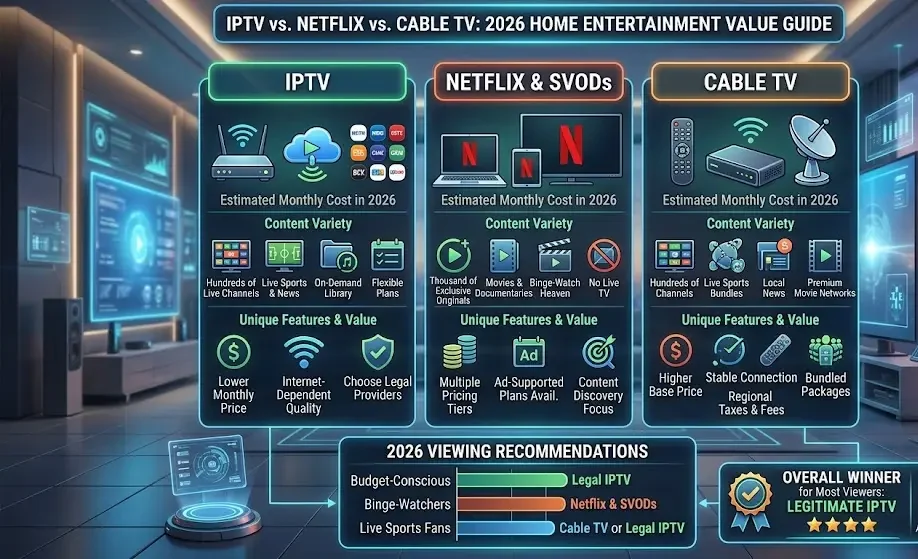
| Budget-Conscious | IPTV (legal providers) | Offers hundreds of channels at a lower monthly cost than cable or multiple SVODs. |
| Binge-Watcher / Movie Buff | Netflix & SVODs | Exclusive shows and movies with on-demand convenience. Best for those who prioritize content over live TV. |
| Sports & Live TV Fan | Cable TV or Legal IPTV | Stable access to live events and premium channels. IPTV can be a cheaper alternative if internet is reliable. |
Overall Winner for Most Viewers: Legal IPTV
- Combines broad channel access, live TV, and on-demand content at competitive prices.
- Flexibility and customization make it ideal for the 2026 home entertainment landscape—just ensure you’re using legitimate services to avoid legal or quality issues.
The future of television in 2026 is about flexibility, choice, and smart spending. Whether you crave binge-worthy series, live sports, or a little bit of everything, there’s an option tailored to you. So, which path will you take? Share your thoughts in the comments—how are you shaping your home entertainment in 2026?